To read a city’s past, present and future, look through the eyes of design.
At 2026 Wuhan Design Day, the design-tour routes hosted by the Wuhan Municipal Natural Resources and Urban-Rural Development Bureau and organized by the Wuhan Planning Association (Wuhan City of Design Executive Office), the Wuhan Planning and Design Institute, the Wuhan Natural Resources Conservation and Utilization Center and the Wuhan Geomatics Institute created three distinctive routes, inviting designers and expert guests from home and abroad to explore the city immersively. From the landscape and cultural vein of the great river between Tortoise and Snake hills, to the everyday life of old streets and lanes, and on to the AI-powered intelligent manufacturing front line of the Auto Valley — one route, one perspective, threading together Wuhan’s diverse explorations in historic renewal, old-city revitalization and industrial innovation. Walking these routes, one sees ancient heritage meet modern creativity and human warmth coexist with cutting-edge technology, and unlocks, through firsthand visits, the distinctive answers of a City of Design.
Route I | Design Tour · One Bridge, Two Mountains: International Designers Walk the Great River,Reading how the city’s past and present coexist
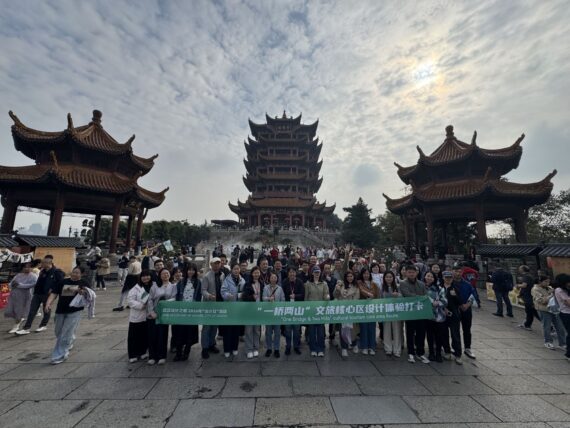 “Tortoise and Snake lock the great river” is the urban skeleton written into Wuhan’s bones. On this design tour exclusive to Wuhan Design Day, a group of international designers took this classic cultural route, visiting the Wuhan Literature Museum, Yellow Crane Tower, the Guibei launch area, Zhiyin Hall and the Guishan TV Tower. Amid facing hills and rushing rivers, they observed at close hand the coexistence of landscape and city and the revitalization of industrial heritage and historical context, seeking the design code behind Wuhan’s renewal of existing space.
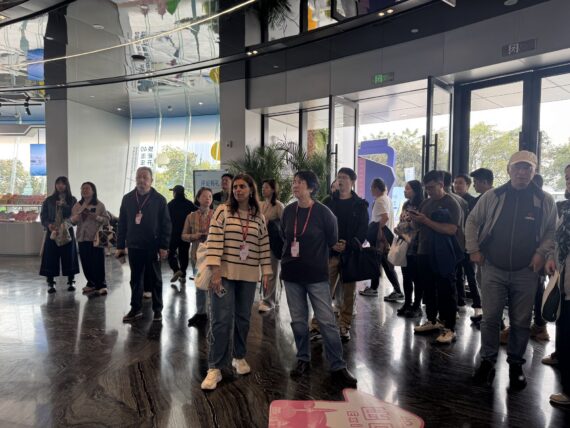 What makes this route moving is not the piling up of individual sights but a systematic stitching and reawakening. The Guishan TV Tower, once hailed as “Asia’s Mast,” was completed in 1986 and, after 18 years of silence, returned renewed this year — its reservation slots were snapped up as soon as it opened. Zhiyin Hall has likewise left behind years of idleness; its redesigned 270-degree viewing platform takes in the sweeping prospect of the rivers paying homage, while an immersive experience combining river views, food and performances gives the old building a wholly new way of being experienced. With the Zhiyin Cultural Tourism Area newly rated a national 4A scenic area, the landmarks scattered along both banks are no longer isolated photo spots. Along the themed route “Splendors of the Jianghan,” Yellow Crane Tower, Doujiying, the ferry, Qingchuan Pavilion, Guqin Terrace and Guishan are linked in sequence; a river crossing of barely ten minutes threads together a millennium of cultural memory — “seeking Li Bai atop Yellow Crane Tower, finding a true friend at Guqin Terrace” — achieving shared visitor flows and interlinked storytelling.
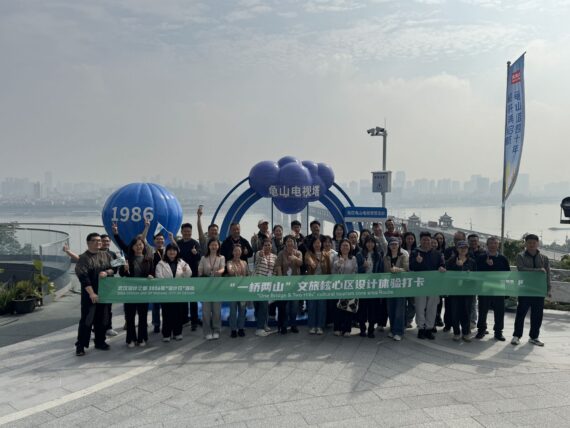
The ingenuity of the planning lies in opening sight lines, activating nodes and linking routes. Yellow Crane Tower has moved beyond a single ticketed sightseeing model to explore new rooftop viewing scenes in its neighborhood; the Yangtze River Bridge has shed its purely transport role to become an iconic city tableau seen from the river; Guishan is no longer merely a green hill for residents’ daily climbs but a panoramic terrace overlooking the three towns; and Guqin Terrace has broken free from static exhibition to extend a Zhiyin cultural route with consumption and immersion. Breaking down the barriers between separately managed scenic areas and bringing dormant landmarks back into city life is the core logic of the renewal of the One Bridge, Two Mountains area.
Standing atop the Guishan TV Tower, with river, hills, bridge and city all in view, the unique cityscape struck the visiting designers powerfully. Dr. Lama Abdulrahman Harkan, Associate Professor at the College of Design, King Saud University (Saudi Arabia), said that looking down, she understood the safety considerations and construction wisdom her forebears had embedded in monumental engineering, and fell deeply in love with the city — unlike elsewhere, Wuhan’s details achieve a harmonious blend of old and new. Isabella Peck, Head of Music Affairs at the Department of Culture, Arts, Tourism and Sports of Kuala Lumpur City Hall, felt the same: many cities have rivers and bridges, but the profound, vivid and utterly unique history settled in this land is the most precious core of Wuhan’s tourism design.
Good urban cultural tourism design never stops at creating scenery; it weaves an urban narrative that can be walked, felt and empathized with. With landscape as its ground and cultural memory as its soul, One Bridge, Two Mountains interweaves a millennium of poetry, the memory of the industrial age and contemporary renewal practice, allowing visiting design professionals to sense directly the thinking and strength of the city’s renewal, and offering the world a Wuhan model of stock renewal in which landscape and city, old and new, coexist.
Route II | Design Tour · Bustling Wuhan: Through Old Streets, Seeing the City’s Warmth in Contrasts
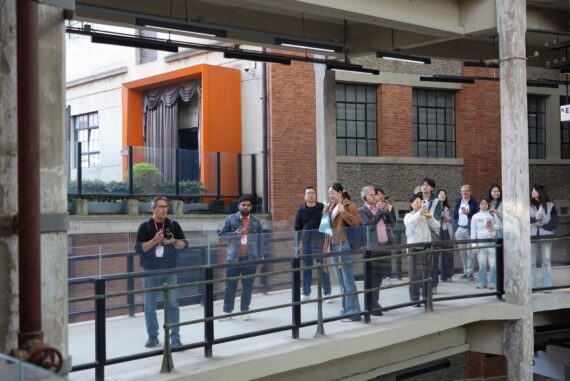 As the second route of Wuhan Design Day, Bustling Wuhan led guests into the old city of Hankou and the ancient city of Wuchang, linking renewal sites by car, on foot, by ferry and by sightseeing bus. Step by step, scene by scene, they felt the everyday vitality hidden in the lanes, and understood how design awakens existing historic space, keeps old buildings and old blocks serving residents, and realizes the co-creation of creativity and the sharing of outcomes.
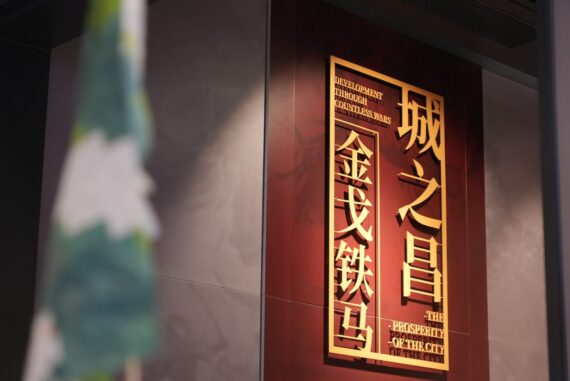
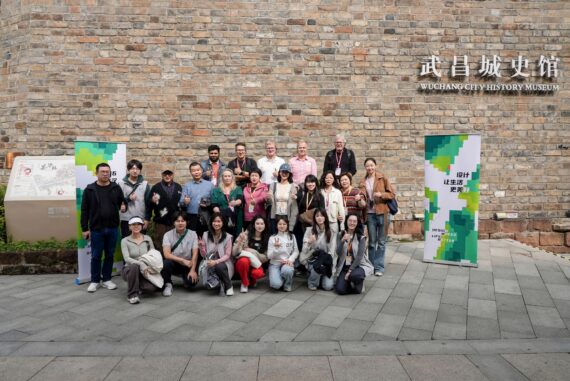 From Bagong House, No. 81 Dongting Road and the Pinghe Packing Plant to the historic riverside district, Hankou’s century-old lane houses and old factory buildings have left silence behind and become vibrant creative spaces. Guests walked the route, then crossed the Yangtze by ferry, viewing both banks from a new angle in the river breeze; after landing they boarded a sightseeing bus to roam the ancient city of Wuchang, visiting Tanhualin, Tanhua Theatre and the Wuchang City History Museum, touching the thousand-year urban fabric of the old city. The grand urban skeleton and the fine-grained, vivid texture of daily life collide and intertwine along this route.
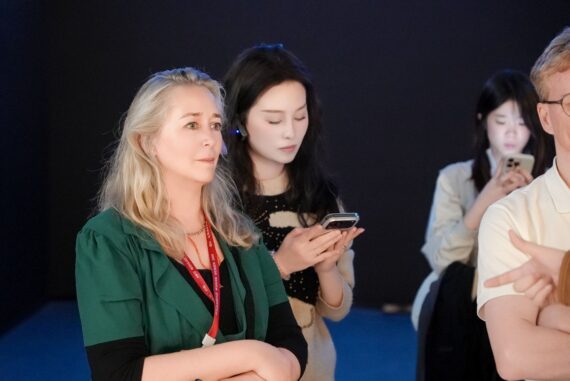
 Bettina Lamm, Professor at the University of Copenhagen, walked the route and was fascinated by Wuhan’s distinctive spatial contrast: high-rises build a majestic skyline that, as night falls, plays like a city symphony; step down into the lanes, and there is an intimate, steaming scene of life where shops, crowds and food gather, vitality rushing at you. The street trees across the city impressed her even more: this greenery is not merely scenery but regulates the street microclimate, softening the pressure of large buildings and forming a gentle transition between towers and lanes, weaving the whole city into a coherent, relaxed and vital whole.
 Lee Parks, Executive Director of Landscape at AECOM, felt a deeper connection along the way: this cross-border design dialogue and long international friendship are rooted in a decade of partnership between UN-Habitat and the Wuhan Planning and Design Institute.
Unlike the grandeur of the landscape-landmark route, the core of Bustling Wuhan is people’s lives. Old-city renewal is not simply restoring the old as old; it is, while keeping the historical undertone, using refined design of landscape, space and business formats to retain the ceaseless everyday vitality of the lanes. History is no longer a label sealed in buildings but a daily life in which citizens can wander, linger and gather — and that is the most moving value of stock renewal.
Route III | Design Tour · Smart Design in the Auto Valley: AI Empowers Industrial Design, Seeing design’s new expression in the era of intelligent manufacturing
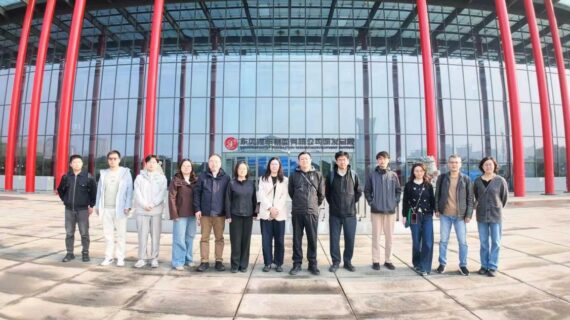 If the first two routes read the gentle renewal of historic space amid old streets and hills, this Auto Valley route led guests onto the frontier track of Wuhan’s industrial design, focusing on three directions — AI-generated design, automotive industrial design and digital interaction design. At the Dongfeng Motor Global Innovation Center, through showroom briefings, AI interaction experiences and test drives, they came close to the industrial strength born where technology and design meet, witnessing how a creative idea is turned step by step into reality.
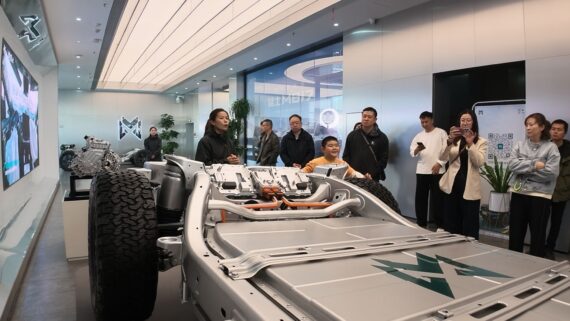 Starting from the technology exhibition center, guests surveyed hard-core achievements including the Yuan architecture, Mach power, solid-state batteries, Dongfeng’s hydrogen platform, the self-developed DF30 chip, and the Tianyuan intelligent driving and cockpit systems. Moving to the styling design area, clay models and digital models were displayed side by side; advanced lightweight materials and aerodynamic design constraints showed that behind automotive styling lies not only aesthetics but rigorous engineering logic. The appeal of the Tianyuan cockpit unfolded gradually: its human-machine interface allows creative concepts to reach engineering validation faster. Guests then went to the M-Hero technology experience center to feel the “Heroic Soul” aesthetics of Eastern off-road design, and took test rides on a professional track, directly experiencing how hard-core chassis technology and all-terrain intelligent solutions turn design concepts into drivable, perceptible mobility experiences.
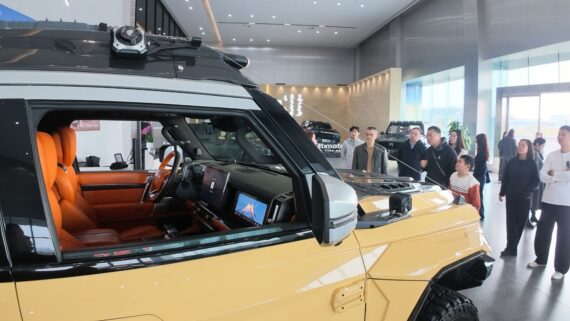 Walking the showrooms, guests arrived at a shared reflection: industrial design has never been only about a good-looking shell. Technology is the skeleton; design is the soul. AI opens a new dimension of efficiency for design, but the final landing point is always human feeling — the comfort of cockpit interaction, the friendliness of the travel experience, and long-term thinking oriented toward green and low-carbon development. When algorithms, simulation and new materials merge with designers’ aesthetics, insight and humanistic thinking, industrial design steps beyond mere product development to become a bridge connecting technological innovation and everyday life.
One Bridge, Two Mountains is the renewal of historical memory; Bustling Wuhan is the continuation of old streets and lanes; Smart Design in the Auto Valley is design exploration oriented to the future. The three routes mirror one another — one guarding the past a city has settled into, the other heading toward the far shore of digital intelligent manufacturing — together piecing together a three-dimensional, complete picture of Wuhan as a City of Design: design can gently repair the old city’s fabric and also inject agile imagination into advanced industries, balancing inheritance and innovation with the power of design and moving toward the infinite possibilities of a city’s diverse growth.