On the afternoon of November 4, the UNESCO Creative Cities Thematic Seminar was held at the Wuhan City of Design Exhibition Center · Siwei Space. As a key parallel event of 2026 Wuhan Design Day, the seminar took “Creativity for the People: Reshaping Inclusive Public Space through Design” as its theme, focusing on how creativity can travel from industry circles into citizens’ everyday life. It gathered more than 70 participants — representatives of Creative Cities from Thailand, Malaysia, Saudi Arabia, Japan, India and other countries, together with representatives of UNESCO Creative Cities in China (Qingdao, Wuxi, Suzhou, Beijing, Hangzhou, Jingdezhen, Chongqing, Shenzhen and Shanghai), experts and scholars — to discuss how inclusive public space can be created.
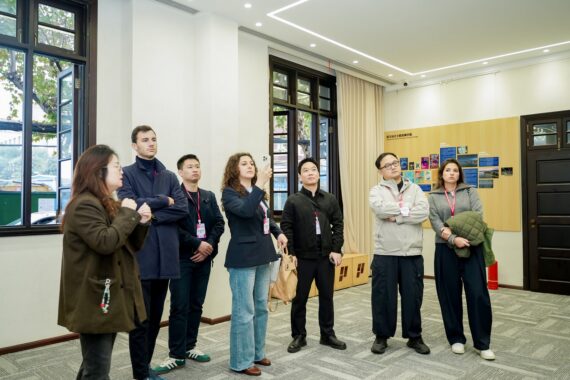
The seminarwas guided by the Chinese National Commission for UNESCO, the Secretariat of the UNESCO Creative Cities Network (UCCN) and the UNESCO Multisectoral Regional Office for East Asia; hosted by the Wuhan Municipal Natural Resources and Urban-Rural Development Bureau; and organized by the Wuhan Planning Association (Wuhan City of Design Executive Office).
At the seminar, Qin Jun, Deputy Director of the Wuhan Municipal Natural Resources and Urban-Rural Development Bureau, delivered a welcome address. He noted that inclusive public space is an important vehicle for urban renewal, and that creativity should not remain an achievement of industry circles alone but must be translated into public goods that all citizens can perceive and enjoy. Wuhan, he said, takes design as a bond and practices co-building and shared benefits in revitalizing historic districts, shaping waterfront space and building creative communities, and looks forward to learning from and with cities around the world through the Creative Cities Network, so as to explore paths by which creativity can benefit people’s livelihoods.
Qin Changwei, Secretary-General of the Chinese National Commission for UNESCO, and Shahbaz Khan, Director of the UNESCO Regional Office for East Asia, each sent video remarks. They affirmed the seminar’s focus on inclusive public space and expressed the hope that Creative Cities would strengthen the exchange of practice and turn cultural creativity into a lasting force for improving the living environment.
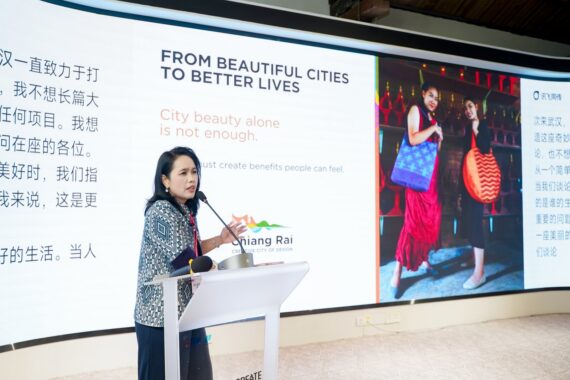 Promporn Chindawong Nathaen KhunNong, Deputy Coordinator of the Design subnetwork of the UNESCO Creative Cities Network and President of the Chiang Rai City of Design Group (Thailand), delivered the keynote speech. From the perspective of the global Cities of Design network, she shared international experience in using creativity to drive inclusive upgrading of public space, and argued that urban design should respond fully to the needs of different groups so that public space truly serves diverse urban populations.
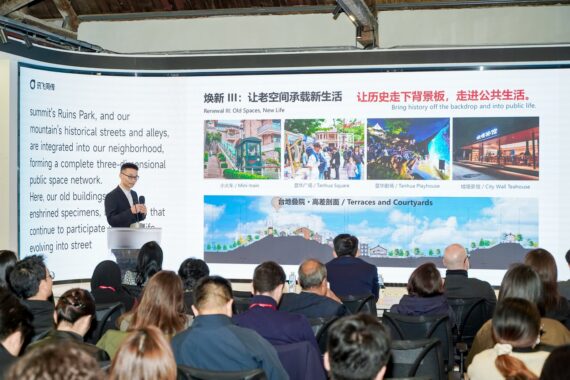
In the city case-presentation session, cities at home and abroad took turns presenting their practice. Hong Mengliang, a senior planner at the Wuhan Natural Resources Conservation and Utilization Center, spoke on “Starting from ‘Xin’ — Tanhualin: An Inclusive Historic District Renewal Practice Linked by Design,” introducing Wuhan’s exploration in historic landscape conservation, business format renewal and resident participation in Tanhualin.
 City representatives from Kuala Lumpur (Malaysia), Riyadh (Saudi Arabia), Asahikawa (Japan) and Wuxi (Jiangsu, China) shared vivid cases on revitalizing local historic districts, building cultural spaces, communicating urban culture and empowering public scenes with music; practices from different regions sparked new ideas.
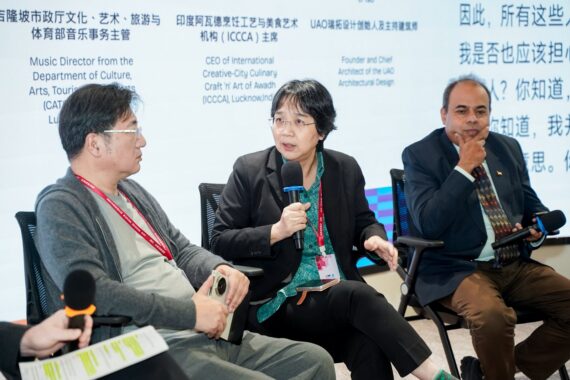
The seminar also featured a thematic dialogue, academically moderated by Jonathan Strebley, former President of the International Council of Design, with round-table guests from Wuhan Institute of Design and Science, Kuala Lumpur, Lucknow (India) and UAO Architectural Design.
Guests exchanged views on the multiple values of public space, the revitalization of existing space, mechanisms for public participation and the inheritance of local culture, and explored how to break down professional barriers, put citizens’ real needs at the front of the whole design process, and make public space serve aesthetic, social and livelihood values at once.
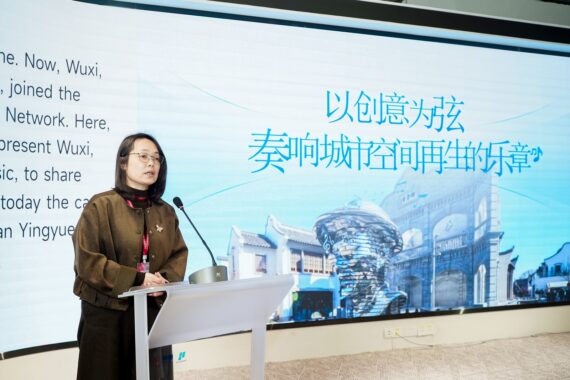 Wu Junqin, Director of the Wuhan Municipal Natural Resources and Urban-Rural Development Bureau, summarized the seminar. The essence of “Creativity for the People,” she said, is to turn creativity from the work of a few into a gift the whole city shares. As a UNESCO City of Design, Wuhan will continue to make good use of the Creative Cities Network platform, keep deepening the building of inclusive public space, carry participatory design through the whole process of urban renewal, and bring more small yet beautiful public spaces into streets and communities so that design outcomes reach the wider public.
 After the seminar, representatives of participating Creative Cities joined the “Bustling Wuhan” design tour, visiting in person the renewed old quarters of Hankou and Wuchang — Bagong House, the Pinghe Packing Plant and Tanhualin among them — to observe Wuhan’s practice in historic district conservation and inclusive public space creation. In the evening, guests also attended the Designers’ Night and Sunset Concert held at the Wuchang Bay Tiandi complex, experiencing the city’s vitality where design and art meet.